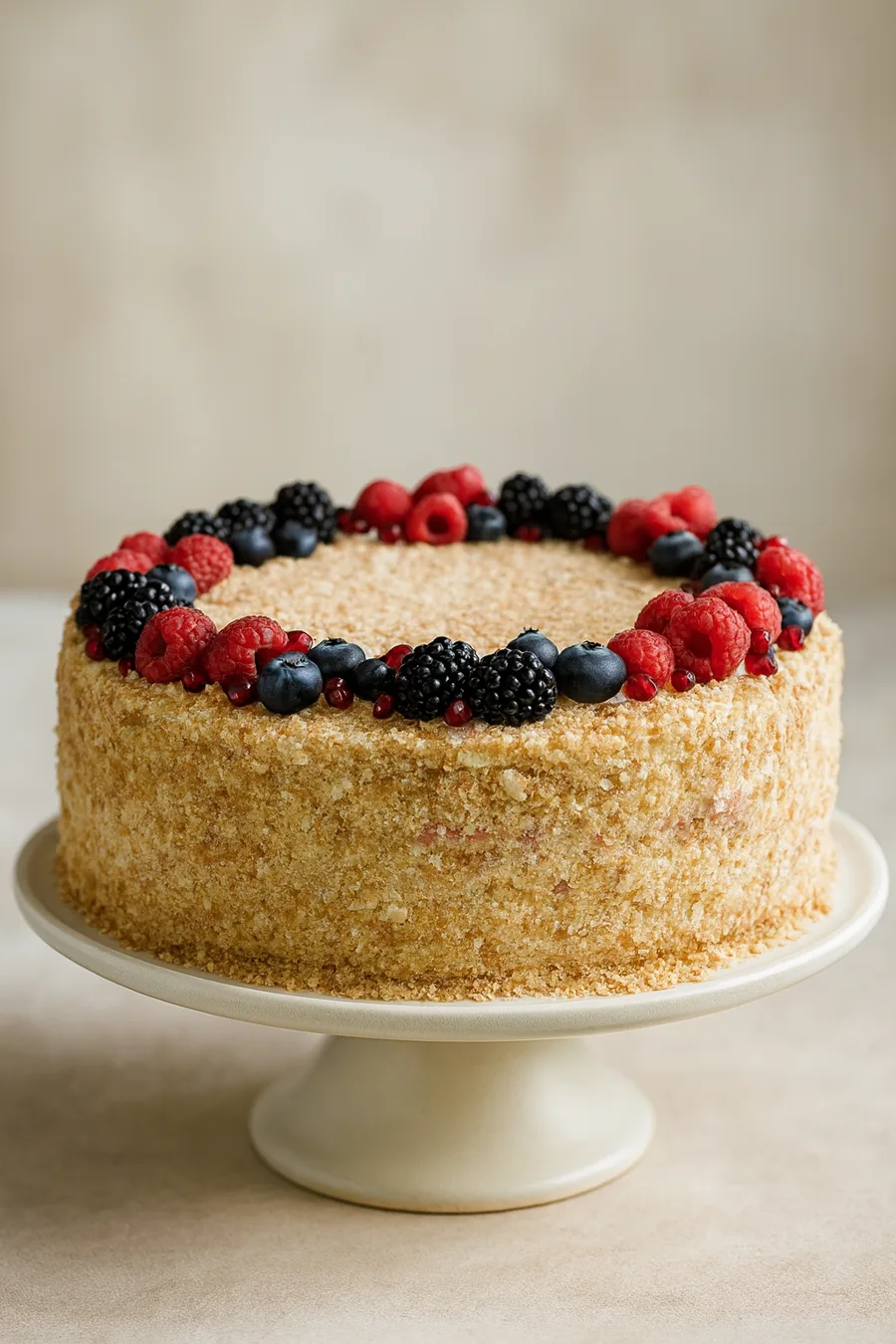
Ask anyone who grew up in Lithuania to name the cake that appeared at every family table, and you will hear the same answer more often than any other: Napoleonas, the Napoleon cake. Thin sheets of puff pastry, real custard between them, soft crumbs pressed into the sides, and a rest overnight that turns a stack of crisp layers into one tender cake. We bake it now in McKinney, Texas, the same way it was baked in the kitchens we learned from.
This article tells the story behind the cake, explains how it differs from the French dessert it descends from, and gives practical answers about serving, storing, and ordering one.
Where the Napoleon cake comes from
The Napoleon's ancestor is the French mille-feuille, literally "a thousand leaves," a pastry built from layers of puff pastry and cream. Puff pastry itself was refined in French kitchens over the seventeenth and eighteenth centuries, and the layered dessert made from it became a fixture of Paris pastry shops in the nineteenth.
The name is where the stories start. One common explanation is that "Napoleon" is a worn-down version of "napolitain," meaning in the style of Naples, and has nothing to do with the emperor. Another links the cake to celebrations marking the anniversary of Napoleon's defeat in Russia, when bakers in Moscow supposedly made a triangular version to resemble his hat. Food historians tend to favor the first explanation, but the second is the one most families repeat, and it has stuck to the cake for over a century.
What is not in doubt is how far the cake traveled. It became a home-baking staple across Lithuania, Poland, Ukraine, Russia, and the rest of the region, and each country shaped it a little differently. In Lithuania it is the celebration cake for name days, Christmas, and Easter, and it is the cake a grandmother is judged by.
What makes a Napoleon different from a mille-feuille
If you have eaten a mille-feuille in a French patisserie, you know the format: three crisp rectangles of puff pastry, two layers of pastry cream, a fondant or icing-sugar top. It is built shortly before serving and eaten while the pastry still shatters.
The Napoleon cake of Eastern and Northern Europe takes a different road. The differences are worth spelling out:
- Many more layers, often eight to fifteen, each rolled very thin and baked separately
- Custard cream rather than stiff pastry cream, usually made with butter or condensed milk for richness
- A round or square shape assembled as a whole cake, not individual slices
- Sides and top coated with the crumbs of the baked pastry trimmings
- A rest of several hours or overnight in the refrigerator before it is cut
That rest changes everything. The custard slowly soaks into the pastry, the layers relax, and the cake becomes soft enough to cut with a fork while still showing dozens of fine lines in each slice. A mille-feuille is about crunch. A Napoleon is about tenderness with a memory of crunch.
How we bake ours
Our Napoleon Cake with Berries follows the layered European tradition. Puff pastry sheets are baked until golden, then stacked with custard cream, and the sides are finished with golden crumbs. On top we add fresh berries and pomegranate, which cut through the richness of the custard and make the cake look as festive as it tastes.
Like everything from our kitchen, it is baked to order. That matters with a Napoleon because the cake has a best moment: after the layers have softened but before the pastry loses its structure entirely. We time each cake so that moment lands on your celebration.
Our roots are in Lithuania, and this is one of the recipes that came with us to North Texas. If you are curious about the rest of that story, our article on Lithuanian baking traditions, handcrafted in North Texas covers the other cakes and pastries that made the trip.
What it tastes like and who it is for
A Napoleon is not a sweet cake in the American sense. There is no thick frosting and no sugar crust. The flavor is butter, vanilla custard, and toasted pastry, with the berries adding sharpness. People who find buttercream cakes too heavy often say this is the cake they were looking for.
It suits occasions where the cake is served with coffee or tea rather than as a sugar rush at the end of a party: anniversaries, adult birthdays, holiday tables, and any gathering with guests who grew up with European desserts. It is also a good choice for a dinner party, because it can be sliced neatly at the table.
| Cake style | Texture | Sweetness | Serve at | Best within |
|---|---|---|---|---|
| Napoleon cake | Soft layers with fine flakiness | Moderate | Slightly chilled | 48 hours |
| Sponge and cream cake | Light and airy | Moderate | Slightly chilled | 48 hours |
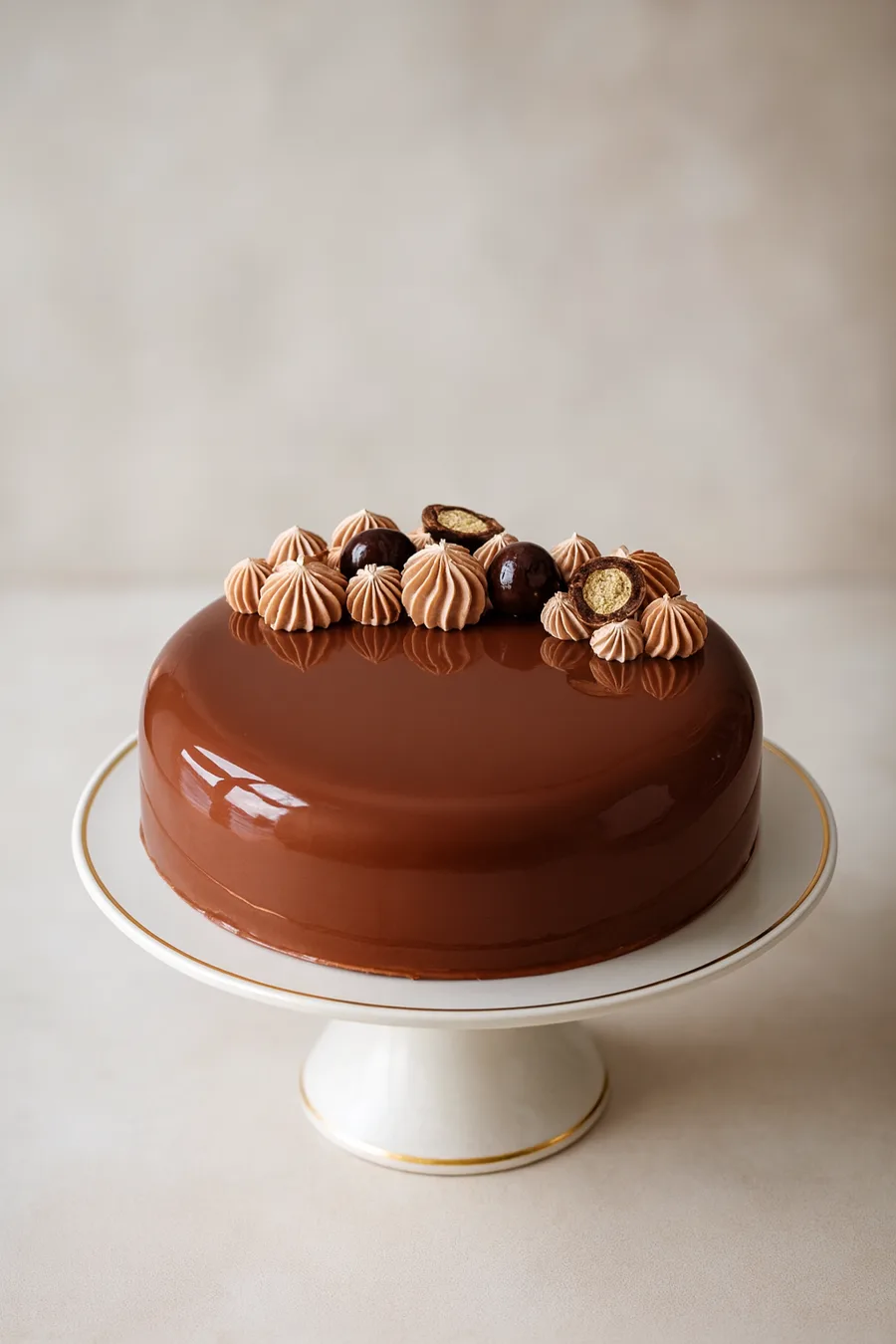
| Mousse and glaze cake | Silky and cold | Moderate | Chilled | 48 hours |
| Baked cheesecake | Dense and creamy | Moderate | Cool room temperature | 48 hours |
The table is a rough guide to help you compare. Sweetness in particular depends on the fruit and the filling you choose.
Serving, storing and transporting a Napoleon cake
Take the cake out of the refrigerator about 30 minutes before serving. The custard softens a little and the flavor opens up. Do not leave it out longer, especially in a warm Texas room, because the custard is rich in dairy and the pastry begins to slump.
For clean slices, use a long, sharp knife and cut with a gentle sawing motion; the layers are soft, but the crumb coating on the sides can crumble if you press straight down too hard. Wipe the blade between cuts so custard does not smear across the crumbs.
Because a Napoleon is rich, most people are happy with a slice slightly smaller than they would take from a sponge cake. If you are working out how many guests a cake will feed, our cake serving size guide has a table for each size and shape we bake.
The Napoleon travels better than many cakes, because the layers hold together once they have softened, but it still wants to be kept cold. Store it in the refrigerator at 36 to 43 °F (2 to 6 °C) in its box, away from strong-smelling foods, and eat it within 48 hours. The berries on top are freshest on the first day.
When you drive it home, place the box flat on the car floor or in the trunk with the air conditioning running. Never put it on a seat; seats tilt, and a tilted cake slides. Our article on how to store and transport a cake in the Texas heat has a full checklist for longer drives across Collin County.
If you prefer, we deliver chilled within McKinney for a delivery fee. Pickup at the bakery is free during our opening hours, Monday to Saturday.
Napoleon on a table of European sweets
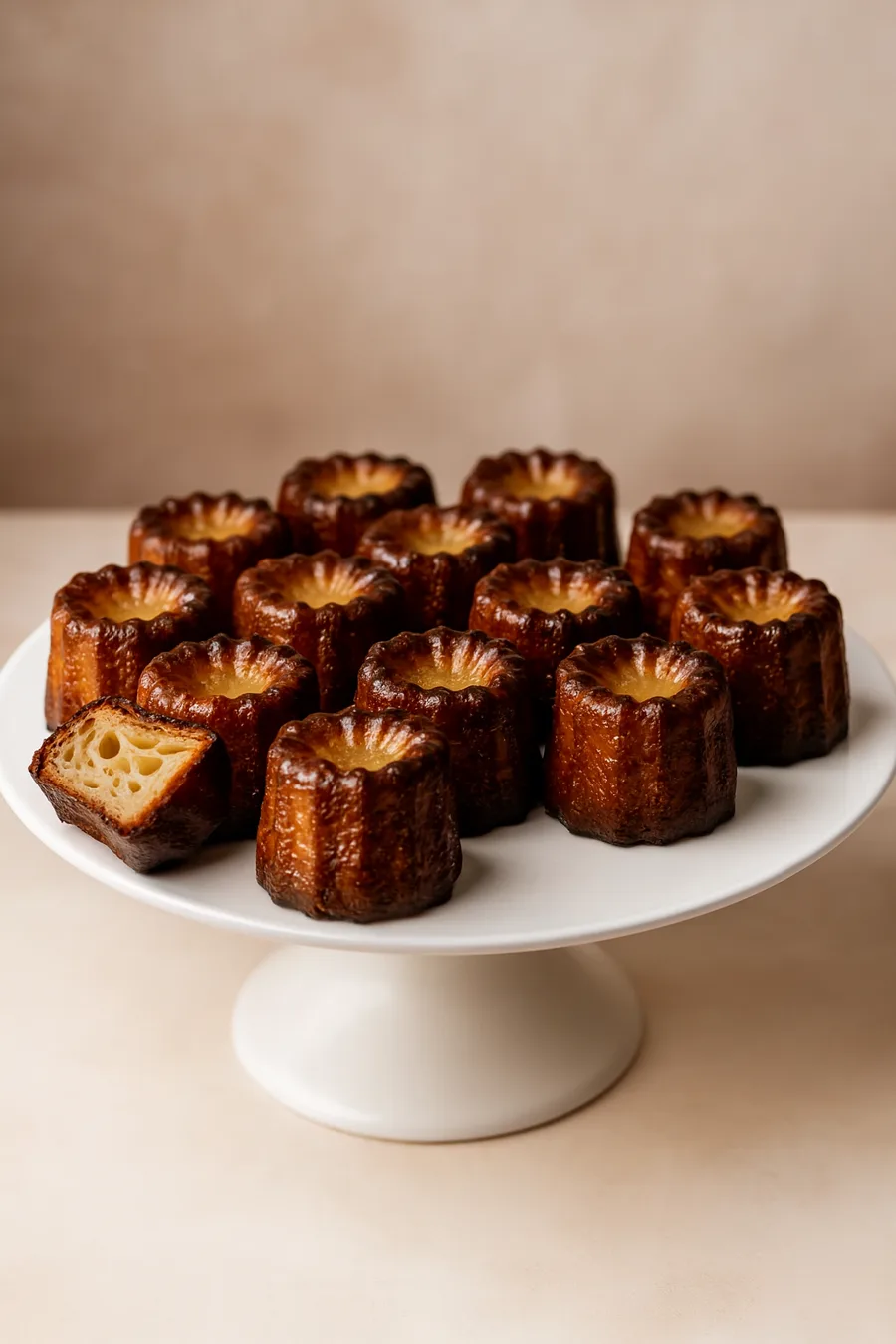
The Napoleon shares its origins with a family of desserts we also bake, and they sit well together on one table. Caneles de Bordeaux, with their caramelized crust and soft vanilla-rum custard inside, echo the custard in the Napoleon in a bite-sized form. A box of French Macarons adds color and lets guests choose their own flavor.
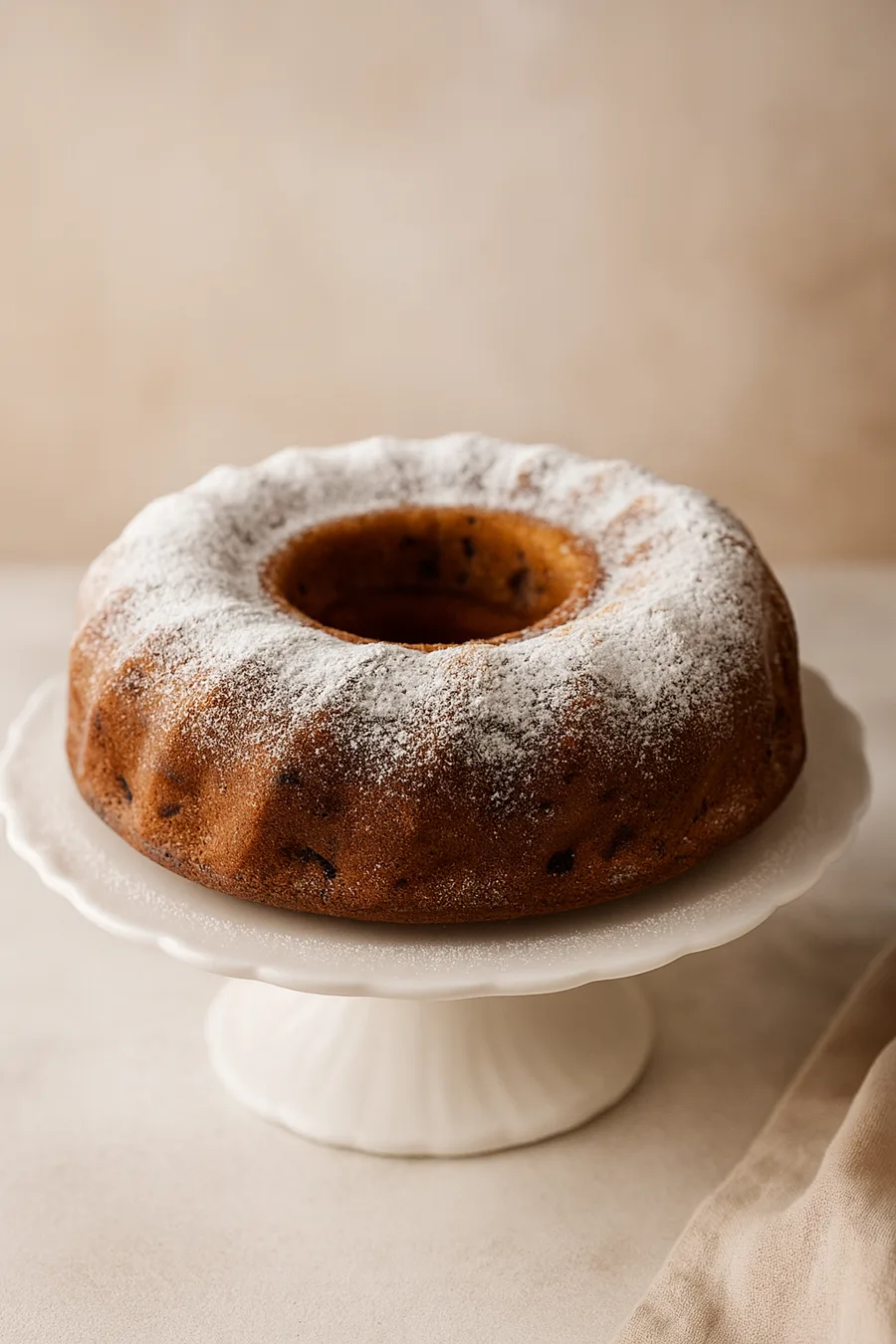
For a more homestyle European table, the Bundt Raisin Cake, a traditional ring cake with tea-soaked raisins and powdered sugar, is the kind of thing that would have been served alongside a Napoleon at a Lithuanian holiday. If some of your guests prefer something lighter and fruit-forward, the Strawberry Cream Cake with vanilla sponge and whipped cream is a gentle companion.
Allergens, dietary notes and ordering in McKinney
A Napoleon cake by nature contains gluten from the puff pastry, dairy from the butter and custard, and eggs. It is naturally nut-free in its classic form, and we can also make it alcohol-free. Our kitchen handles gluten, dairy, eggs, and nuts, so traces cannot be fully excluded, and we would rather tell you that plainly than promise otherwise.
Reduced-sugar and vegetarian versions are available on request, and a full ingredient list comes with every order if you ask for it. If someone at your table has a specific need, mention it when you place the order and we will tell you what is possible.
Our Napoleon Cake with Berries is a standard gallery cake, so it needs three to five days from confirmation. The website order form asks for a date at least two days out; if you need it sooner, call us and we will check whether a next-day bake is possible. Standard gallery cakes are paid at pickup or delivery, with no deposit.
Want a personalized version, a different size, or a Napoleon as part of a larger dessert table for a wedding or event? Send a photo or describe the idea through our custom order form. We will propose the design, flavors, and price before you confirm. Custom and wedding cakes need a small deposit to hold the date, and wedding cakes and large custom designs need two to three weeks.
Ready to order?
You can find the Napoleon and the rest of our cakes in the catalog. Every cake is baked to order in McKinney, Texas, and we confirm each request by email or phone once we have checked the date. If you have a question this article did not answer, call us at +1-214-504-4085 or write to info@virgasweets.com.