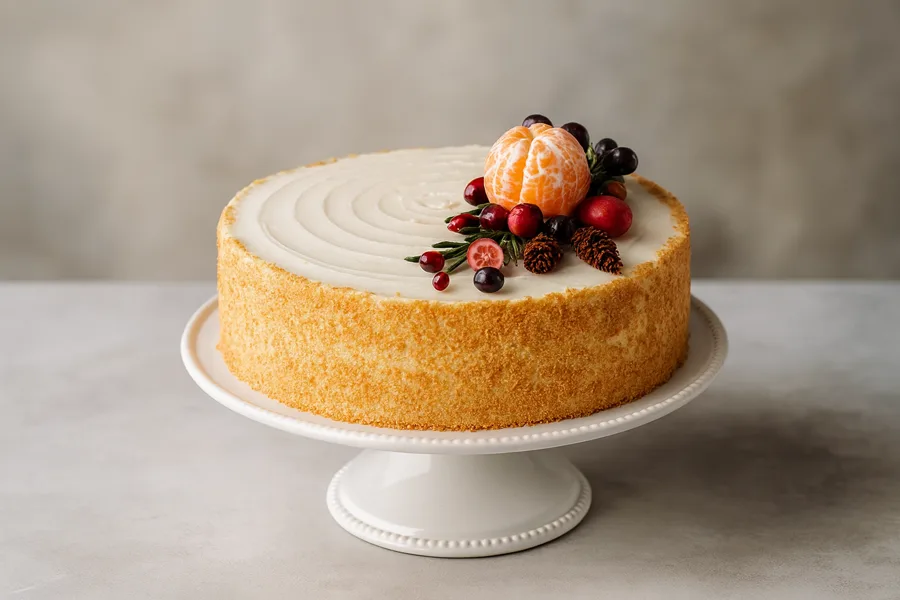
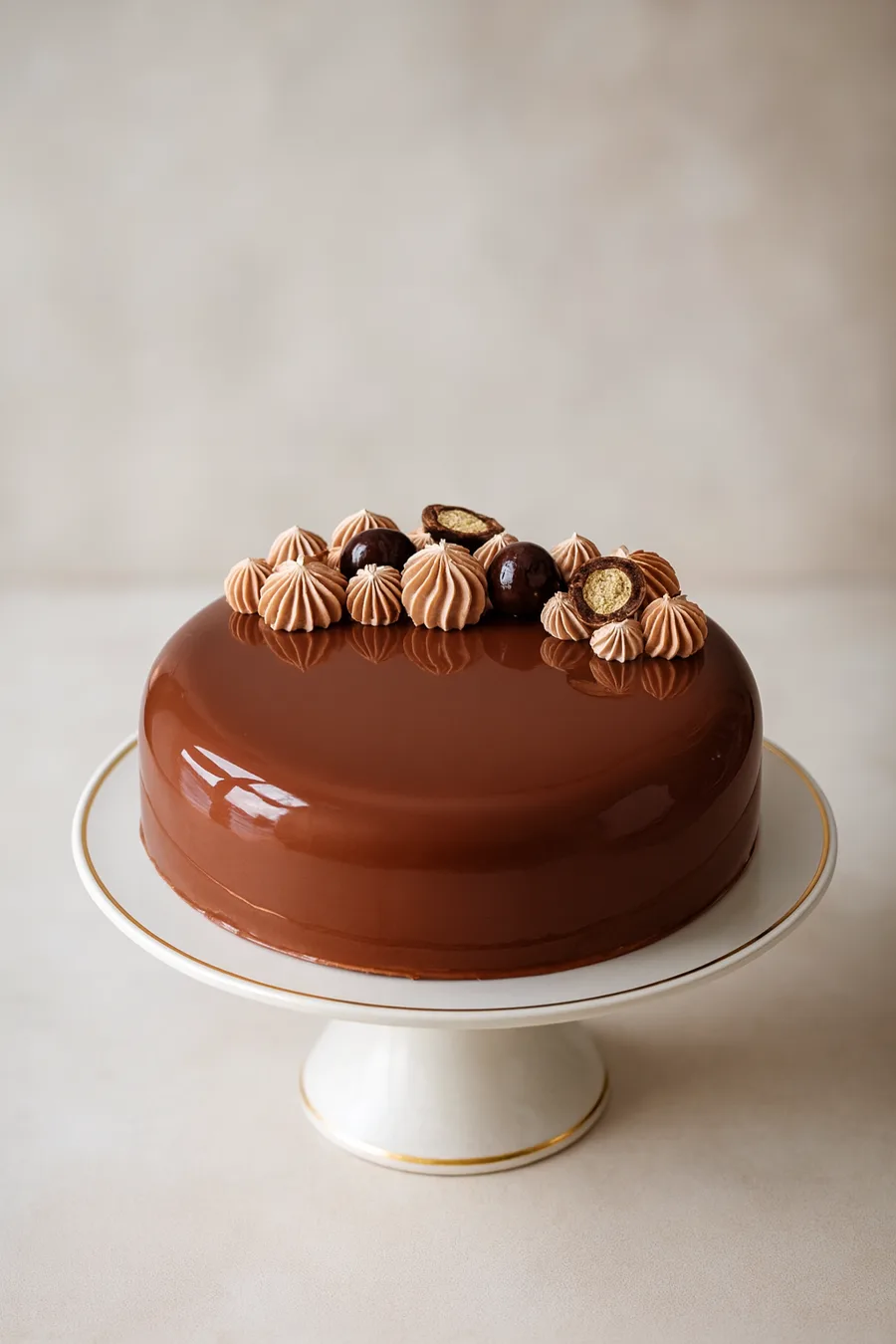
A cake that leaves our McKinney, Texas kitchen in perfect shape can still arrive at the party in trouble if it spends fifteen minutes on a hot passenger seat. We see it every summer: a beautiful cream finish with a soft shoulder on one side, a glaze that slid a quarter inch, a topper leaning where it should stand straight. None of it is hard to avoid. It just takes a little planning and a few habits that are easy to keep.
This guide covers the whole journey, from the refrigerator to the table. How cold to keep the cake, when to take it out, where it goes in the car, what to do when you reach the venue, and which cakes need extra care. If you would rather not think about any of it, we also explain how delivery works.
Why heat is the real enemy
Most of the cakes we make are finished with whipped cream, buttercream, mousse or glaze. All of those are built on fat and air, and all of them soften as they warm. In a cool room that is a slow, gentle process. In a parked car in North Texas it happens fast, and once a cream finish loses its structure it does not come back.
Heat does other things too. Fruit on top of a cake starts to weep. A mirror glaze goes from a firm shell to something tacky that picks up fingerprints and box marks. Tall cakes, which rely on cold, firm layers to hold their shape, begin to lean. The lesson is simple: from the moment the cake leaves a refrigerator, the clock is running, and the warmer the air, the faster it runs.
The good news is that a cake is only in real danger when it is out of the fridge and out of your control. Manage those windows and the rest takes care of itself.
Storing the cake before the party
Every cake we make is baked to order, so it is at its freshest when you collect it. Keep it refrigerated at 36 to 43 °F (2 to 6 °C) and plan to serve it within 48 hours. That is the window in which the sponge is still moist, the cream is still light, and the fruit still looks like fruit.
A few practical habits make a real difference:
- Leave the cake in its box in the refrigerator. The box protects the finish from bumps and from picking up smells.
- Clear a flat shelf before you bring the cake home. Balancing a box on top of a bag of vegetables is how cakes get dented.
- Keep the cake away from strongly scented food such as onions, garlic or leftover fish. Cream picks up smells.
- Do not freeze a finished cake at home. Freezing and thawing changes the texture of cream and fruit, and glaze can crack.
- Once the cake is cut, cover the cut face with a piece of parchment or plastic wrap pressed gently against the sponge before it goes back in the box.
If the party is more than two days out, order for a later pickup date rather than storing the cake longer. Standard cakes need three to five days of lead time, so a quick look at our guide on how far in advance to order a cake will help you line up the date.
When to take the cake out
Timing is where most people get it slightly wrong, usually by taking the cake out too early. For most cakes, take the cake out of the refrigerator about 30 minutes before serving. That is enough time for the cream to soften and the sponge to lose its chill without the finish going soft.
Mousse and glaze cakes are the exception. They taste best slightly chilled, so give them less time on the counter and put them on the table close to serving. The same goes for cheesecakes in a warm room. Our comparison of baked cheesecake vs mousse cake explains why the two behave so differently once they warm up.
Here is a simple reference for the cakes we are asked about most:
| Cake type | Store at | Before serving | Watch for |
|---|---|---|---|
| Whipped cream or buttercream cake | 36 to 43 °F, boxed | About 30 minutes out | Soft edges, sliding decorations in heat |
| Mousse or mirror glaze cake | 36 to 43 °F, boxed | Serve slightly chilled | Tacky glaze, fingerprints, leaning dome |
| Baked cheesecake | 36 to 43 °F, boxed | About 30 minutes out | Sweating top if the room is humid |
| Puff pastry layer cake | 36 to 43 °F, boxed | About 30 minutes out | Crumbs shifting if tilted |
| Fondant-decorated cake | 36 to 43 °F, boxed | Bring out in stages, see below | Condensation on the fondant |
| Macarons | 36 to 43 °F, boxed | About 30 minutes out | Softening shells in humidity |
None of these are rules to stress about. They are the difference between a cake that looks good and one that looks exactly the way it did in the bakery.
Packing the car
The car ride is the single riskiest part of a cake's day, and the fix is almost entirely about where the box sits. Flat, on the car floor or in the trunk. Never on a seat. Seats slope, and a cake on a seat will slide forward at the first stop sign and tip at the first turn. The floor behind the front seats and the flat floor of the trunk are the two safest places in any car.
Before you load the cake:
- Start the car and let the air conditioning run until the cabin is cool. In summer this can take several minutes, so do it before you go inside to collect the cake.
- Clear the space where the box will go. Nothing should be able to slide into it.
- Put a non-slip mat, a towel or a flat rubber liner under the box so it cannot skate on the carpet.
- Keep the box level while carrying it. Hold it from underneath with both hands, not by the lid.
- Drive straight home or straight to the venue. This is not the trip to run one more errand.
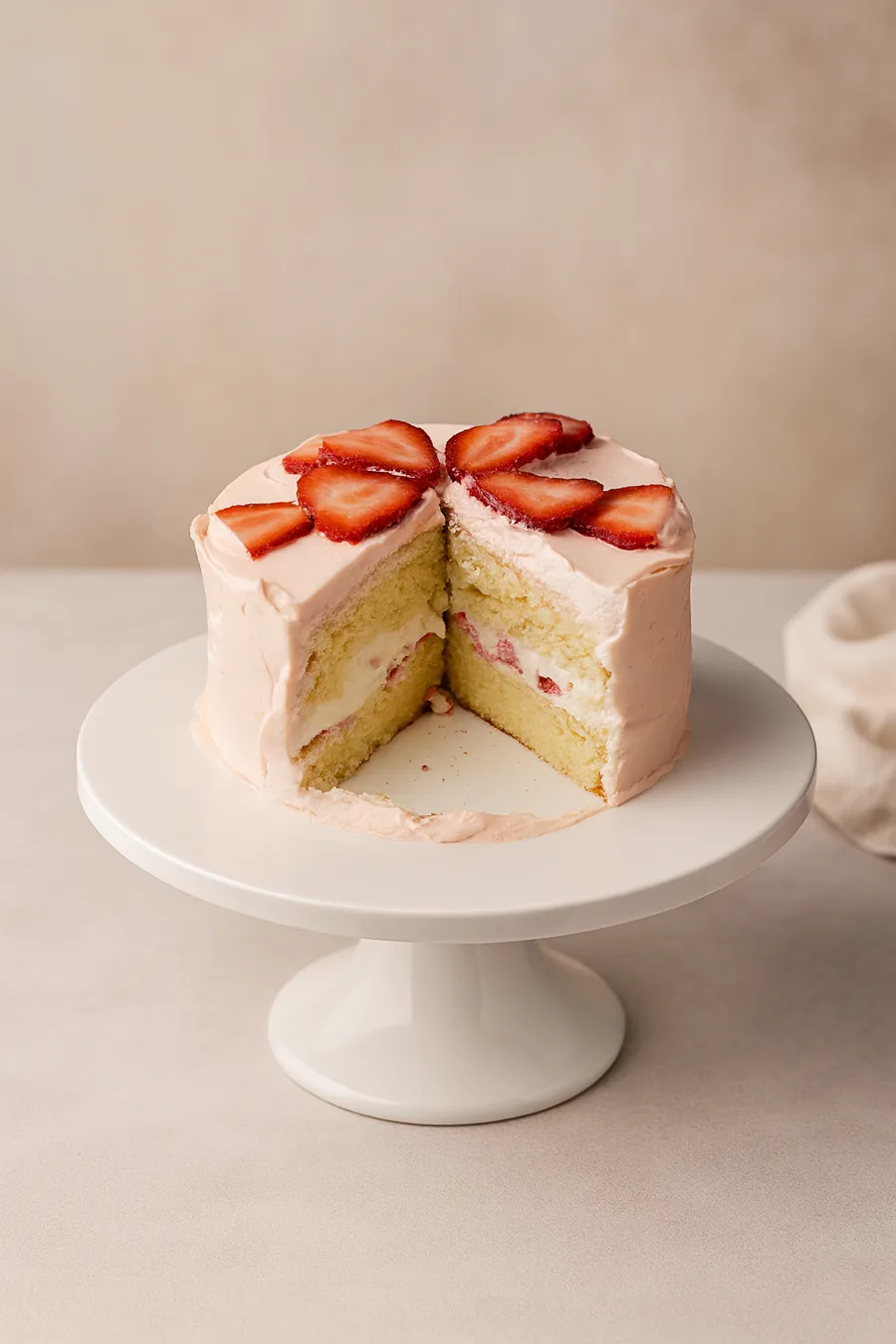
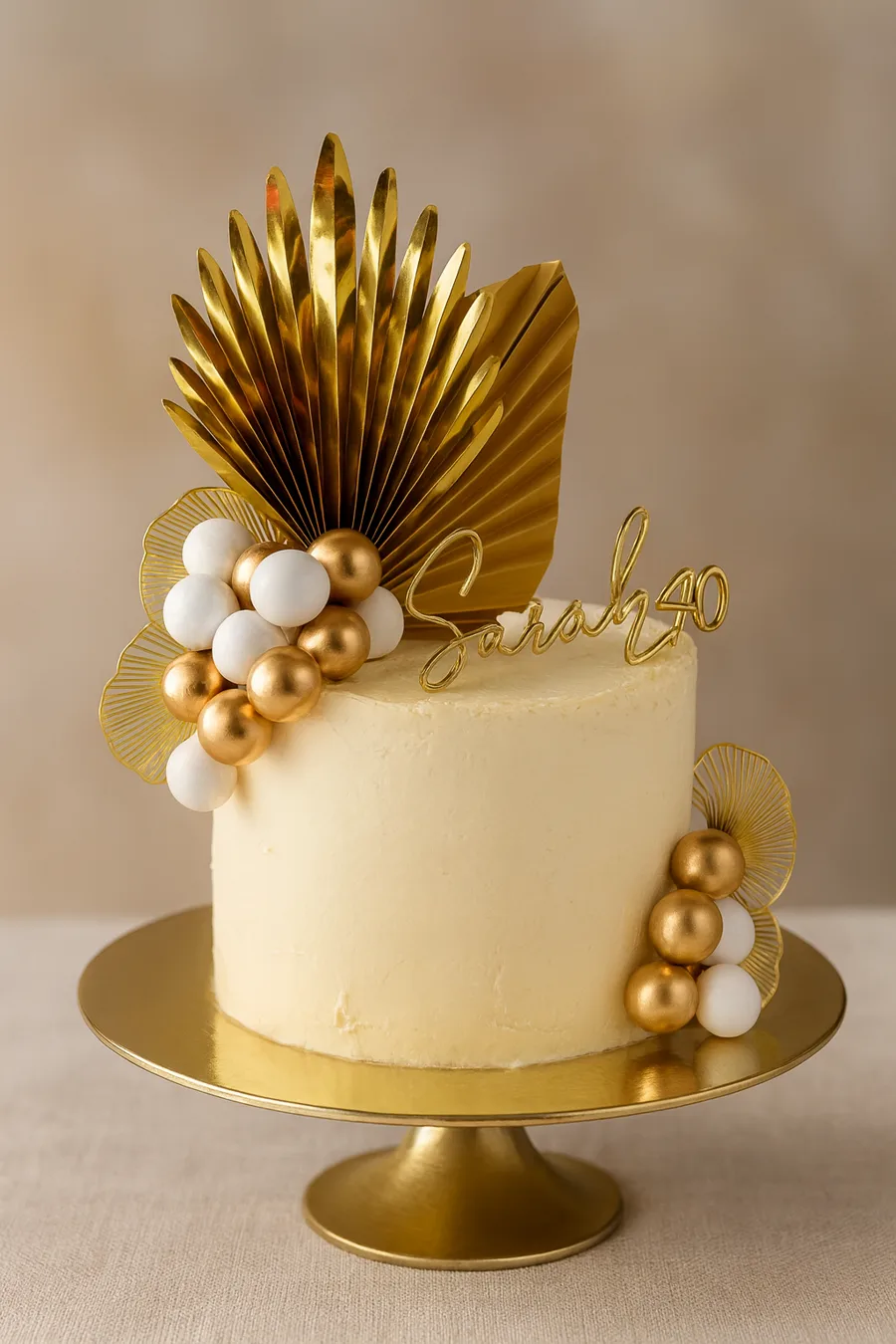
Slow down on turns, brake early, and treat speed bumps with respect. A tall cake such as our White & Gold Celebration Cake is at its most vulnerable during sudden stops, because the height gives any movement leverage. A short, wide cake such as the Strawberry Cream Cake forgives more, but the same rules apply.
If your trip is longer than about half an hour, or you have to make a stop, a cooler that fits the box flat is a good investment. Keep ice packs on the sides, not touching the box directly, and never stack anything on top.
What to do at the venue
Get the cake into a refrigerator as soon as you arrive. If you are taking it to a restaurant, a community hall or a friend's house, ask ahead where the cake can go and make sure the shelf is cleared before you get there. A cake that waits on a counter while someone rearranges a fridge is a cake that is warming up.
If no fridge is available, choose the coolest spot in the building, away from windows, ovens and the dance floor. Keep the box closed until the cake is about to be presented. A closed box in an air-conditioned room buys a surprising amount of time; an open box in direct sunlight buys almost none.
For outdoor events in Collin County, bring the cake out last. Set up the table, the plates and the knife first, then fetch the cake, present it, cut it and get the leftovers back into the cool. If there will be a long gap between the cake reveal and the cutting, consider presenting the cake, taking photographs, and returning it to the fridge until it is time to serve.
Finally, cut with a long, sharp knife, wiped clean between slices. A warm blade helps with cheesecake and cream cakes; a clean, dry blade is better for a glazed cake. Our guide to mirror glaze cakes has more on cutting a glossy finish without streaks.
Cakes that need extra care
Some finishes are more sensitive than others, and it helps to know which ones you are carrying.
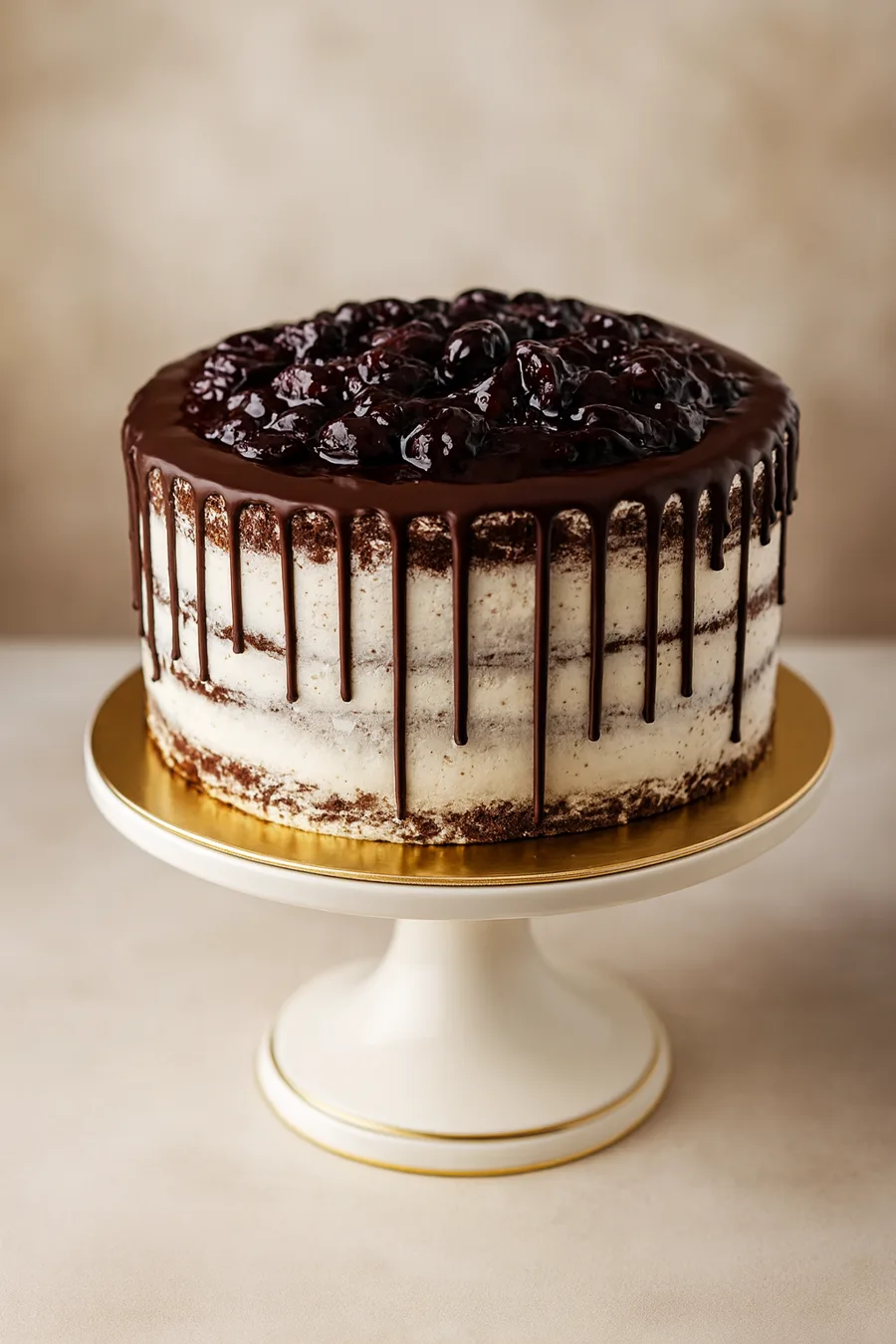
Drip cakes, like our Chocolate Drip Cherry Cake, have a ganache that stays firm when cold and softens when warm. Keep it cold until the last moment so the drips stay sharp. Mirror glaze cakes such as the Chocolate Mirror Glaze Cake should be handled only by the board or the box, never by the sides, because the glaze shows every touch.
Fondant-decorated cakes, such as the Dinosaur Adventure Cake, behave a little differently. Fondant can sweat when a very cold cake meets humid air, so bring the cake out in stages: leave the box closed for the first part of the wait so the surface warms gradually and condensation has a chance to clear before the box is opened.
Layered pastry cakes, like the Napoleon Cake with Berries, are sturdy in the fridge but the crumb coating on the sides can shift if the box is tilted, so keep it level. And French Macarons are light and easy to carry, but the shells soften in humidity, so keep the box closed until serving.
If you are unsure how a particular cake will travel, ask when you order. We know how each one behaves and will tell you honestly.
Let us deliver it
For many customers the simplest answer is to not transport the cake at all. We offer chilled delivery within McKinney, so the cake travels cold and arrives ready for the refrigerator. Pickup at the bakery is free if you prefer to collect it yourself during our opening hours, Monday to Saturday.
Wedding cakes are delivered and set up on site by our team, which takes the whole question off your list on the busiest day of the year. Delivery with on-site setup for other events, such as a large birthday or a corporate party, is quoted individually when you order. Our wedding cake planning guide explains how setup works and what we need from the venue.
Tell us on the order form whether you want pickup or delivery, and if delivery, where the cake needs to go and when. We confirm the details by email or phone before anything is baked.
Ready to order?
Keep it cold, keep it flat, keep it out of the sun, and take it out about 30 minutes before serving. That is the whole method. Browse our cakes in the catalog, and if you have a design in mind that is not there, send us a photo or a description and we will propose the design, flavors and price before you confirm. If you would like us to handle the drive, just say so when you order.