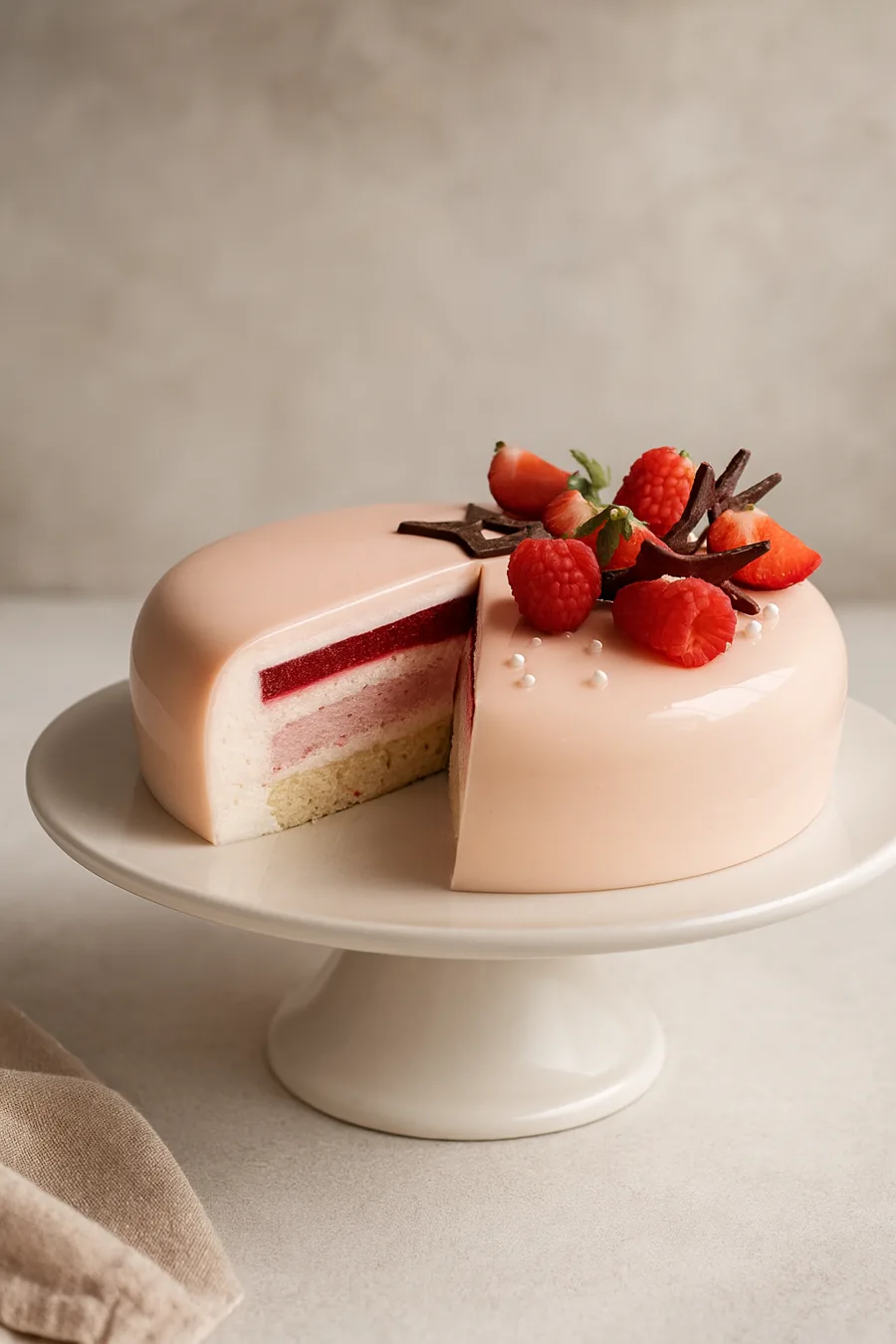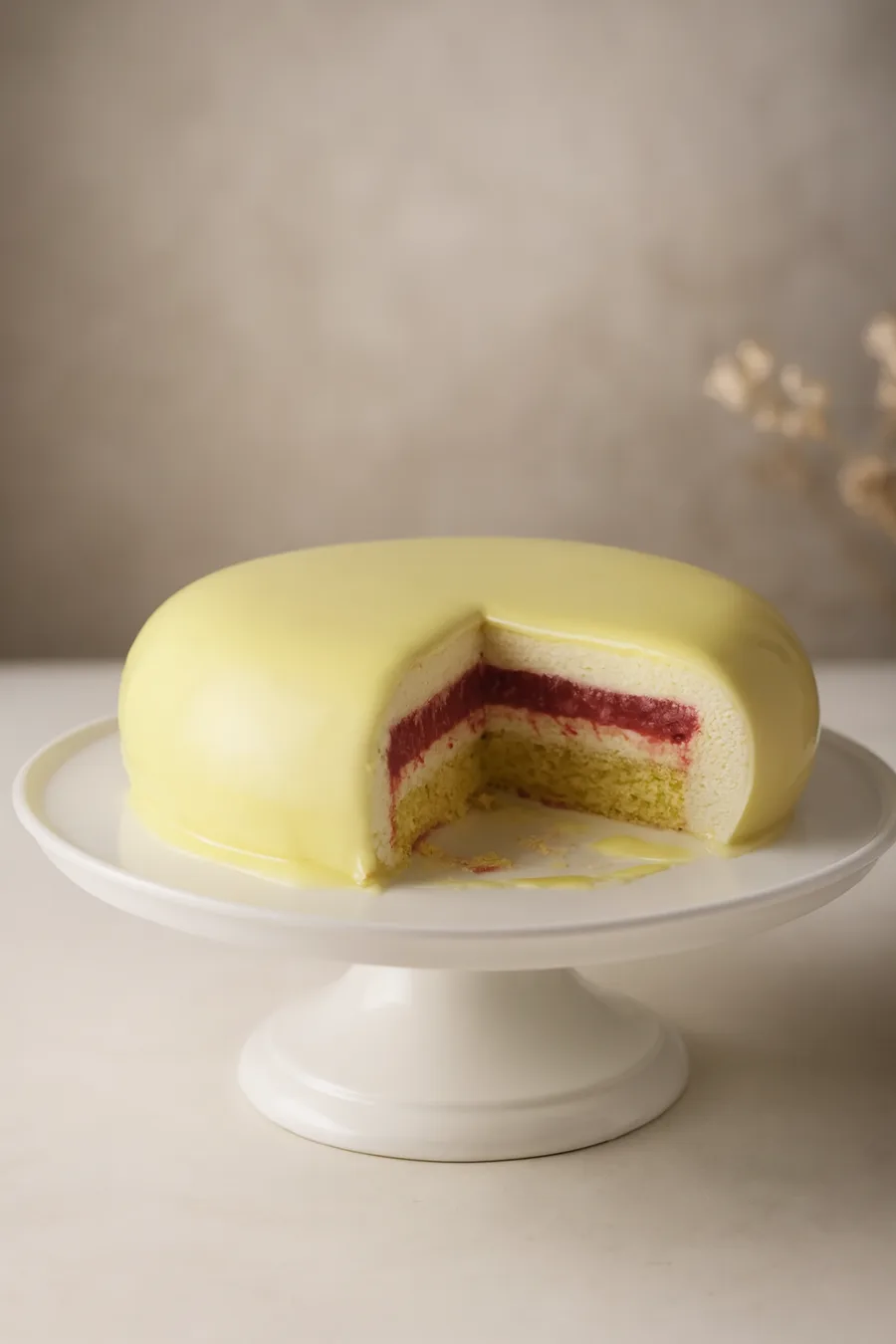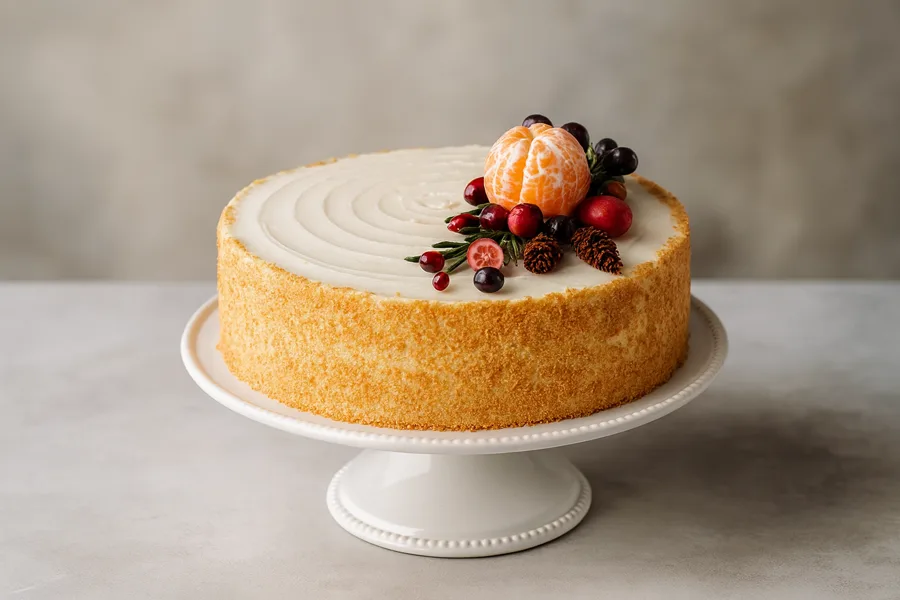
Some cakes announce themselves from across the room. A mirror glaze cake is one of them: a smooth, glossy shell that reflects the light, the candles, and often the faces of the people leaning in to look. Customers in McKinney, Texas ask us about these cakes more than almost any other style, and the questions are usually the same. What is the shiny layer made of? Does it taste as good as it looks? How do I cut it without ruining the finish?
This guide answers all of that. We bake mirror glaze cakes to order in our McKinney kitchen, and we have learned what makes them succeed on the table, not just in a photograph.
What a mirror glaze cake actually is
A mirror glaze, sometimes called glacage miroir, is a thin coating poured over a cake while the cake is very cold. The glaze is built from a few simple things: sugar, water, sweetened condensed milk or cream, gelatin, and white or dark chocolate. Color comes from food-safe gel or powder tints. When the warm glaze meets a frozen surface, it sets almost instantly into a smooth, reflective skin.
The finish looks like polished stone or glass, but it is soft to the bite. A good mirror glaze is only a couple of millimeters thick. It should give way to the fork without any resistance and add a light sweetness, not a chewy layer.
Because the glaze needs a perfectly even surface to shine, it is almost always paired with a mousse cake rather than a traditional layered sponge with buttercream. Buttercream has texture and tiny air pockets that show through the glaze. Mousse, once frozen in a mold, comes out smooth and ready for pouring. If you want to understand that pairing in more depth, our comparison of baked cheesecake and mousse cakes walks through the differences in texture and serving.
What is underneath the shine
The glaze is the cover. The cake underneath is the story. Most mirror glaze cakes are entremets, a French term for a layered mousse dessert built in a mold and unmolded once set. Inside, you will usually find:
- A thin sponge or biscuit base for structure
- One or two layers of mousse, often chocolate, vanilla, or fruit
- A hidden center, sometimes called an insert, such as fruit gelee, caramel, or a second mousse
- Occasionally a crunchy layer for contrast
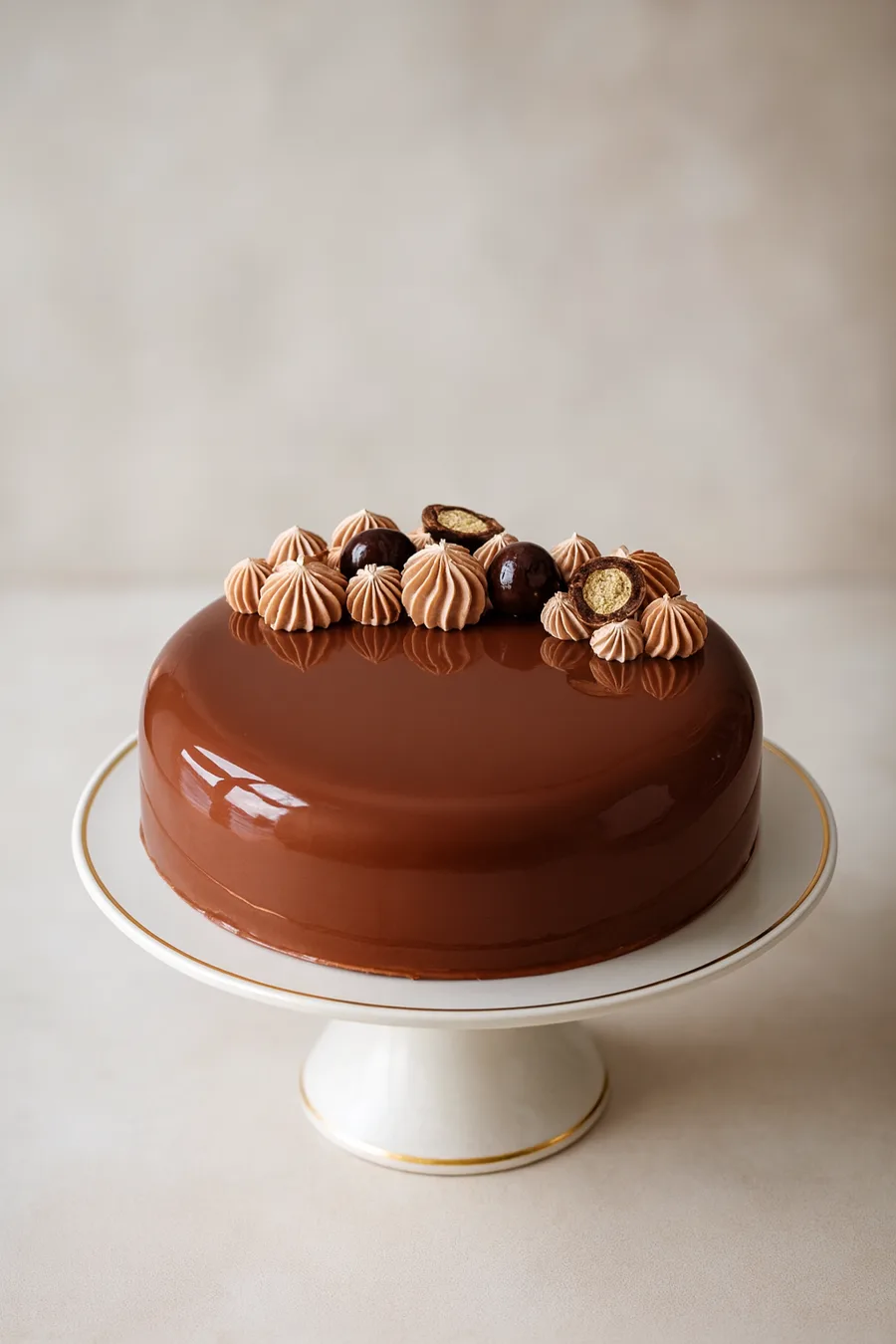
Our Chocolate Mirror Glaze Cake is a good example. It is chocolate mousse set over chocolate sponge, finished with a glossy glaze, rosettes, and hazelnut truffles. The Strawberry Mousse Cake takes the same idea in a lighter direction: strawberry and vanilla mousse in a dome, a berry gelee heart, and a pale pink mirror glaze over the top. The Pistachio & Raspberry Cake uses a pistachio glaze over mousse with a raspberry heart, also in a dome shape.
Each of these cakes is baked to order, which matters more with a mousse cake than with almost any other style. Mousse has a narrow window when it is at its best, and we time each one so it arrives inside that window.
How the glaze is made and poured
Every kitchen has its own proportions, but the general method is the same. The glaze is heated until the chocolate and gelatin dissolve, then cooled to a specific pouring temperature. Too hot and it runs off the cake, leaving thin patches. Too cool and it sets in ridges before it can level itself.
The cake comes out of the freezer, goes onto a rack over a tray, and the glaze is poured in one steady motion from the center outward. Gravity does the rest. Any drips are trimmed once the glaze sets, and the cake is moved to its board. Decorations, such as chocolate spheres, rosettes, or a name topper, are placed afterward. This is also why mirror glaze cakes are rarely stacked in tall tiers. The pouring works best on a single shape.
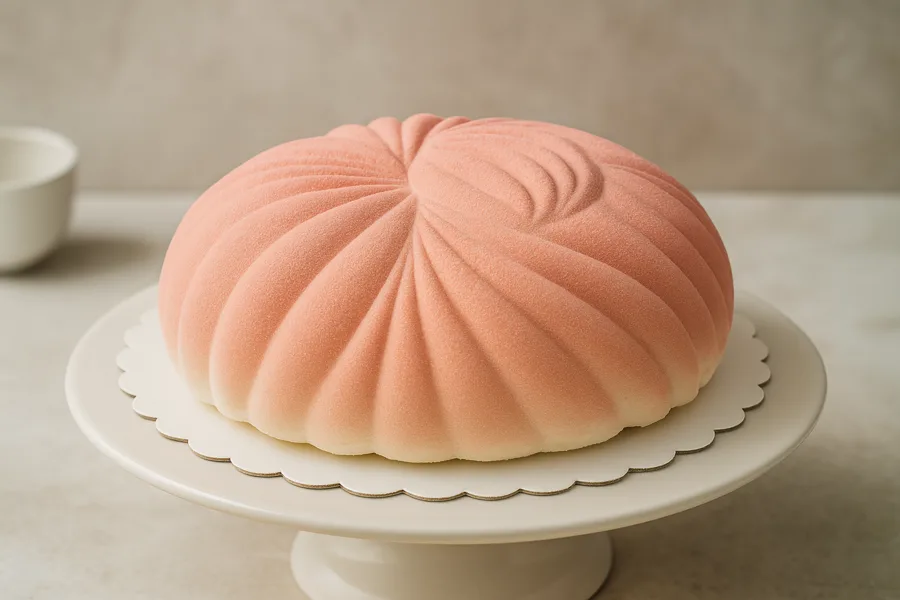
Two related finishes come up often. A velour finish, like the suede-like coat on our Pink Velour Mousse Cake, is sprayed cocoa butter rather than poured glaze. It is matte instead of glossy but sits on the same kind of mousse base. A ganache drip, as on a drip cake, is thicker and flows over the edge of buttercream rather than covering a whole surface.
How to serve a mirror glaze cake
This is the part most people worry about, and the good news is that it is simple. The cake should be served slightly chilled, which is when both the mousse and the glaze taste best. Take it out of the refrigerator about 30 minutes before serving, no more. In a warm Texas dining room, the mousse softens quickly.
To cut clean slices with a bright edge:
- Use a long, thin knife, not a serrated bread knife.
- Dip the blade in hot water and wipe it dry before each cut.
- Press straight down rather than sawing.
- Wipe the blade again before the next slice.
The hot blade melts through the glaze cleanly instead of dragging it. Each slice shows the layers inside, which is half the pleasure of a cake like this.
| Step | Timing | Why it matters |
|---|---|---|
| Refrigerate on arrival | Until serving | Keeps the mousse firm and the glaze glossy |
| Remove from the fridge | About 30 minutes before cutting | Softens the mousse just enough to slice cleanly |
| Cut with a hot, dry knife | At serving | Prevents the glaze from smearing |
| Return leftovers to the fridge | Right after serving | Best eaten within 48 hours |
If you are planning quantities, our cake serving size guide covers how many slices to expect from each size and shape. Mousse cakes are rich, so slices can be a little narrower than you would cut from a sponge cake.
Getting the cake home and keeping it perfect
A mirror glaze cake is sturdier than it looks, but it does not like heat or tilting. The glaze can sweat if the cake moves between cold and warm air too many times, so the goal is to keep it cold and still.
Store the cake in the refrigerator at 36 to 43 °F (2 to 6 °C) in its box. Avoid placing it next to strong-smelling foods, since mousse picks up odors. Plan to serve it within 48 hours of pickup or delivery; that is when the texture is right.
For transport, keep the box flat on the car floor or in the trunk with the air conditioning running, never on a seat. A seat tilts, and a tilted mousse cake can slide inside its box. Our article on how to store and transport a cake in the Texas heat has a fuller checklist, including what to do if you have a long drive across Collin County.
If you would rather not carry it at all, we offer chilled delivery within McKinney for a delivery fee, and pickup at the bakery is free.
Colors, toppers and occasions
The reflective surface makes mirror glaze cakes a natural fit for milestone birthdays, anniversaries, engagement dinners, and baby showers. The finish photographs well under both daylight and indoor lighting. Marbled glazes, where two or three colors are swirled during pouring, are popular for showers and modern weddings; a single deep color reads elegant for adult birthdays.
Our Birthday Mirror Glaze Cake shows how a caramel-toned glaze works with two-tone chocolate cream kisses and a Happy Birthday topper. If you have a color palette in mind, send us a photo or describe the idea through our custom order form. We will propose the design, the flavors, and the price before you confirm anything.
A few things to keep in mind when you customize:
- Very pale colors show the mousse tone underneath, so a white glaze over a chocolate mousse looks slightly warmer than pure white.
- Names and dates are usually added as a topper or on the board, since writing directly on glaze is fragile.
- Fresh fruit and flowers sit on top of the glaze, not in it, and are added as close to pickup as possible.
Flavors, allergens and how far ahead to order
Mirror glaze cakes are chocolate-forward or fruit-forward by nature, and both work well without nuts or alcohol. Most of our cakes can be made nut-free and alcohol-free on request. Our kitchen does handle gluten, dairy, eggs, and nuts, so we cannot fully exclude traces, and we say so plainly. Reduced-sugar and vegetarian versions are possible; ask when you order. A full ingredient list is available with every cake.
Because mousse is typically built on cream, chocolate, and gelatin, some substitutions change the texture. Tell us early what you need, and we will suggest the flavor combination that holds up best.
Standard mirror glaze cakes from our gallery need three to five days. Wedding versions and large custom designs need two to three weeks. Next-day cakes are sometimes possible; call us to ask, since the online form needs a date at least two days out. Our guide to how far in advance to order a custom cake explains the timeline in detail.
Custom and wedding cakes need a small deposit to confirm the date. Standard gallery cakes are paid at pickup or delivery.
Ready to order?
Browse the mirror glaze and mousse cakes in our catalog, or describe the cake you have in mind through the contact form. We bake every cake to order in McKinney, Texas, and we will confirm your date by email or phone. If you have a question about serving or storage that this guide did not answer, call us at +1-214-504-4085 during opening hours, Monday to Saturday.