If you have ever stood in front of a dessert case and wondered whether the tall, glossy dome or the golden, dense round is the better choice for your party, you are not alone. Cheesecake or mousse cake is one of the questions we hear most often in our McKinney, Texas kitchen, and it deserves a real answer. Both are cream-based, both are served cool, and both photograph beautifully. From the first bite, though, they are very different desserts.
This guide walks through how each one is made, how it eats, how it holds up on a table in North Texas, and which occasions suit which. By the end you should know exactly which one to put on your order form.
Two cakes that look alike and eat very differently
At first glance a baked cheesecake and a mousse cake can seem like cousins. Both usually sit on a thin base, both are pale and smooth, and both are decorated with fruit, glaze or piped cream. The difference lives in the middle.
A baked cheesecake is dense and rich. It gets its body from cream cheese or curd cheese and eggs, set by gentle heat in the oven. A mousse cake is light and airy. It gets its body from whipped cream folded into a flavored base and set in the cold, not in the oven. One is about depth and creaminess, the other is about lightness and lift.
That single difference shapes everything else: how each cake slices, how it behaves at room temperature, how sweet it tastes, and how it fits into a meal. Once you understand it, the choice usually makes itself.
What makes a baked cheesecake a baked cheesecake
A baked cheesecake starts with a soft cheese filling, sweetened and blended with eggs until smooth. The filling is poured over a base and baked slowly at a low temperature so it sets evenly. Then it rests and chills, which is where the texture firms into that familiar, velvety density. The chilling step is not optional; a cheesecake that is cut too soon after baking will never have the right texture.
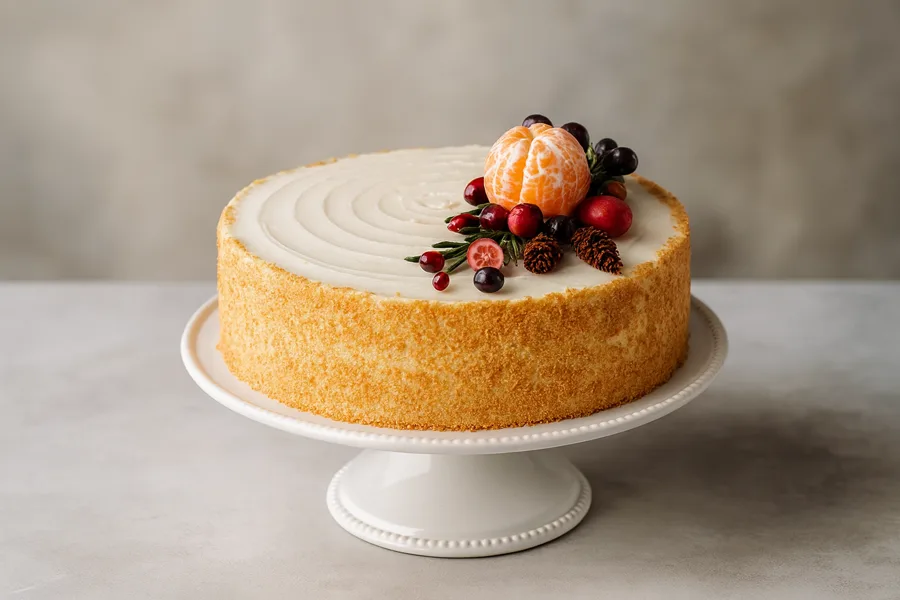
In our kitchen the Cranberry & Mandarin Cheesecake is a good example of the style: a baked cheesecake with a spiral cream top, cranberries, mandarin and a touch of rosemary, sized to serve twelve. The tartness of the fruit is there for a reason. A rich cheesecake wants something bright next to it, and cranberry does that job well.
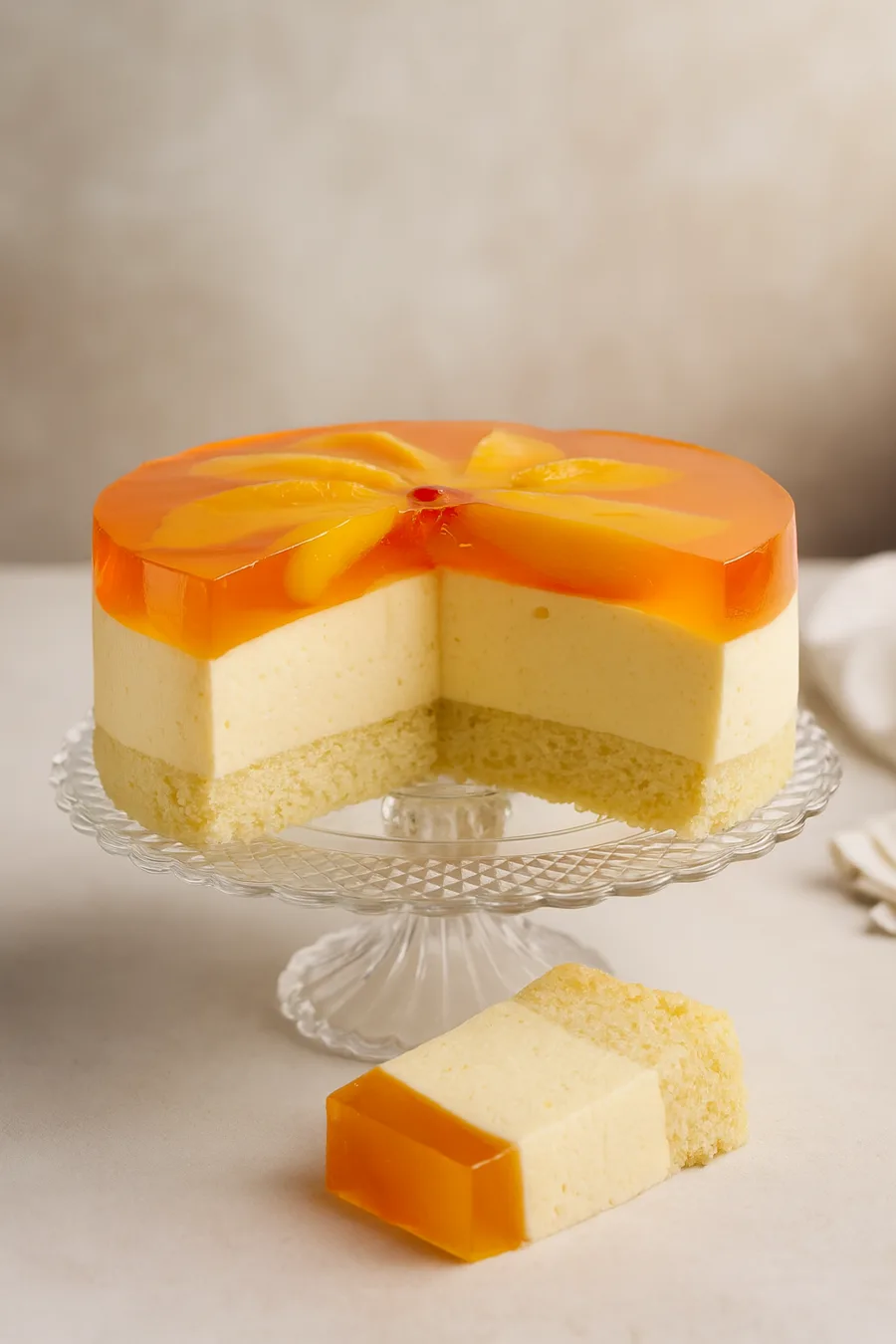
Not every cheesecake is heavy. The Peach Jelly Cheesecake is a lighter curd-cream cheesecake set on a sponge and finished with peach slices in fruit jelly. It sits closer to the middle of the spectrum, which makes it a good pick if half your guests love cheesecake and the other half say it is too rich.
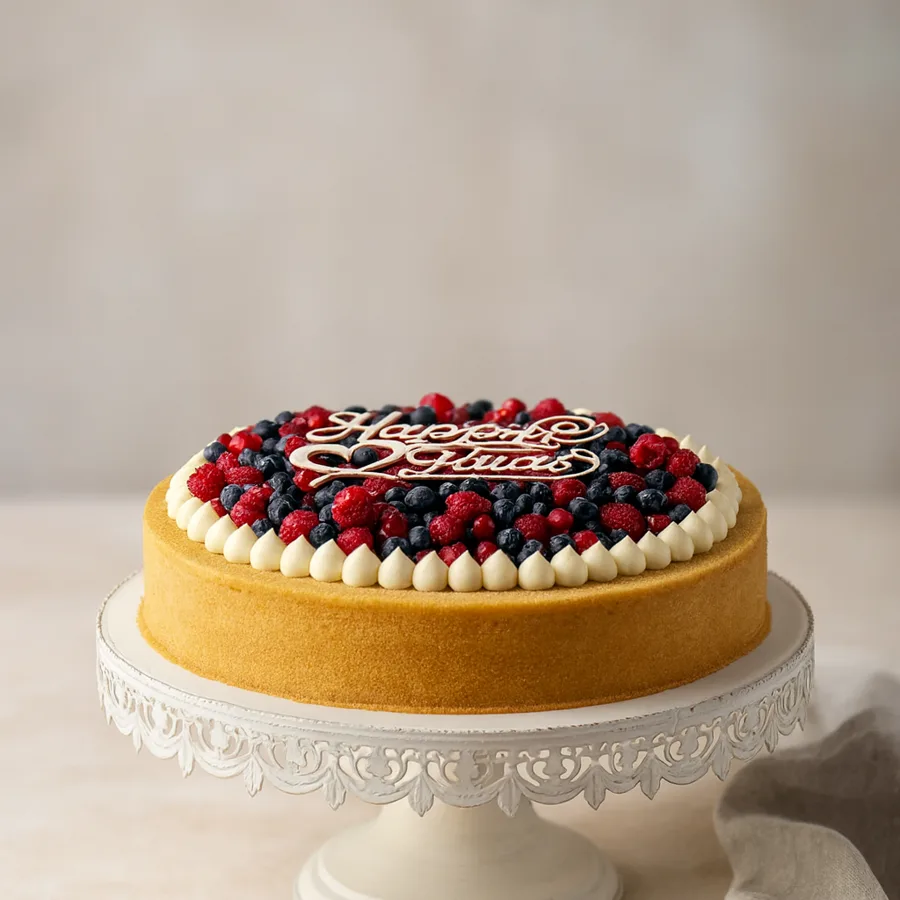
For larger gatherings there is the Wedding Berry Cheesecake, a large celebration cheesecake with golden crumb sides, piped vanilla cream, raspberries and blueberries, and a personalized topper. Cheesecake works well as a wedding or anniversary cake precisely because it is sturdy, slices cleanly and does not depend on tall stacked tiers to look festive.
What makes a mousse cake a mousse cake
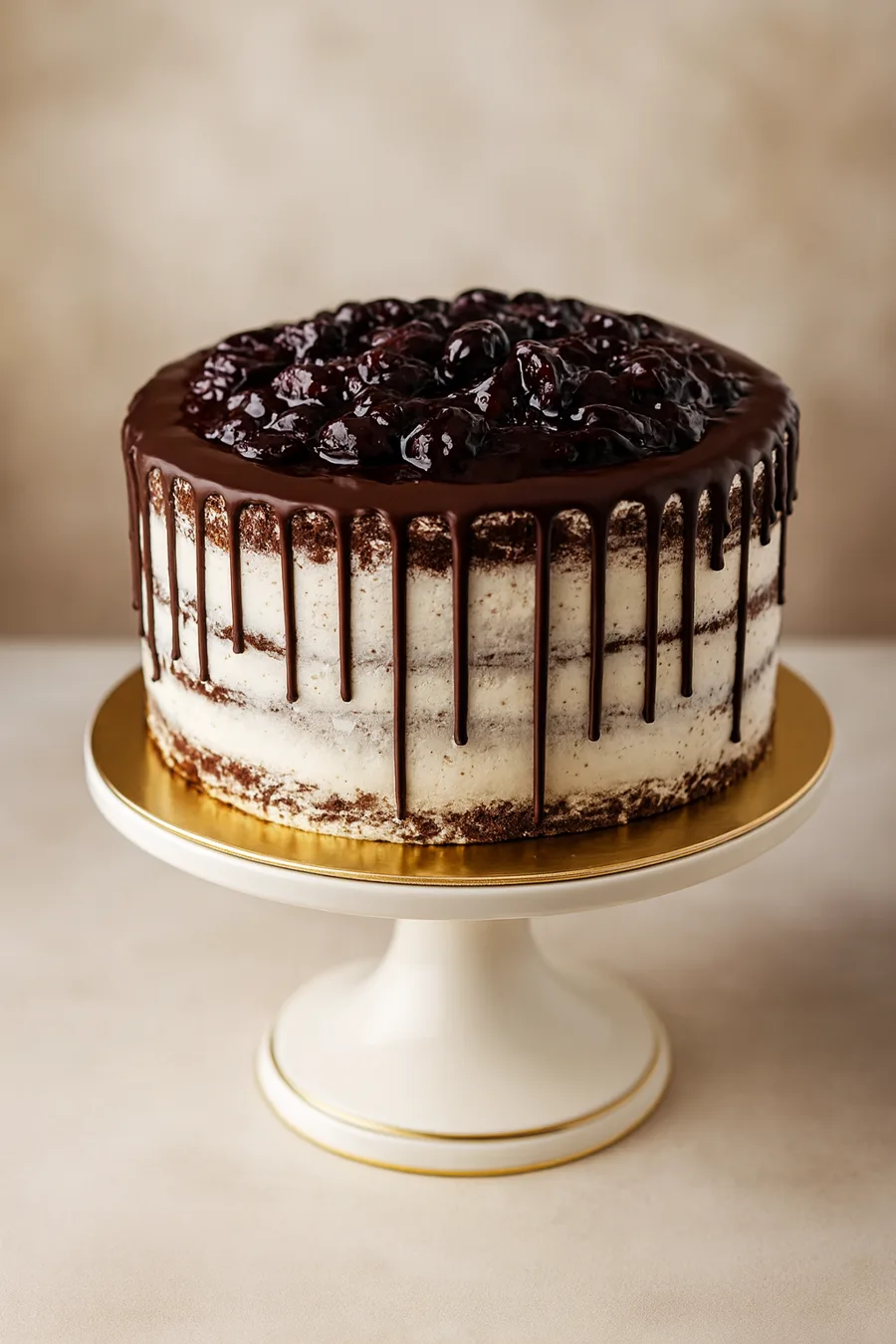
A mousse cake, often called an entremet in European pastry, is built in layers and set cold. A typical build is a thin sponge or biscuit base, one or more mousse layers, and often a hidden insert such as a fruit gelée or a compote. The whole thing is frozen to hold its shape, then finished with a mirror glaze or a velvet spray and thawed in the refrigerator before serving.
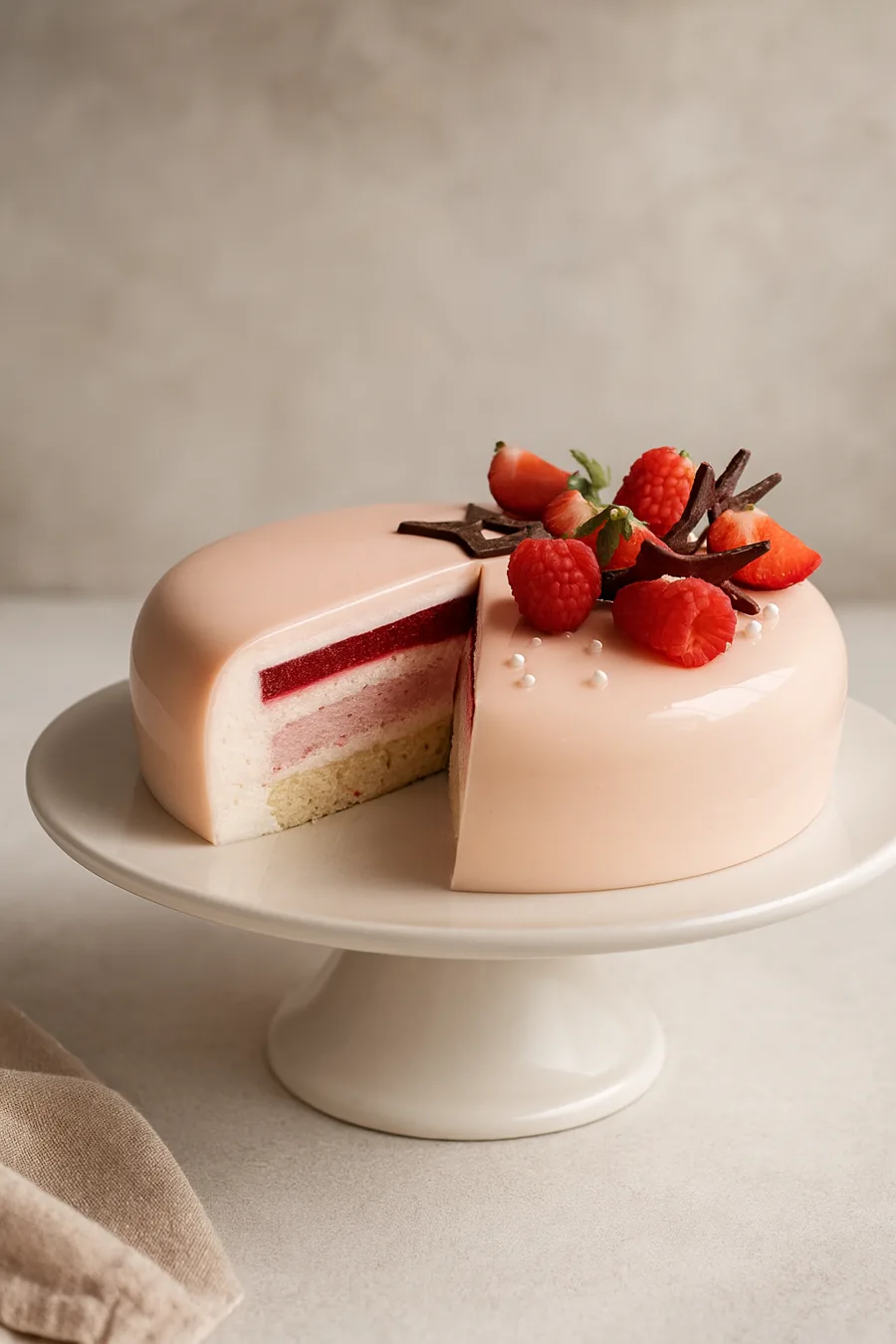
Our Strawberry Mousse Cake is a strawberry and vanilla mousse dome with a berry gelée heart and a pale pink mirror glaze. The Pistachio & Raspberry Cake follows the same idea with a pistachio glaze over mousse and a raspberry heart. And the Pink Velour Mousse Cake shows the other classic finish: a suede-like velour coating over a swirl silhouette.
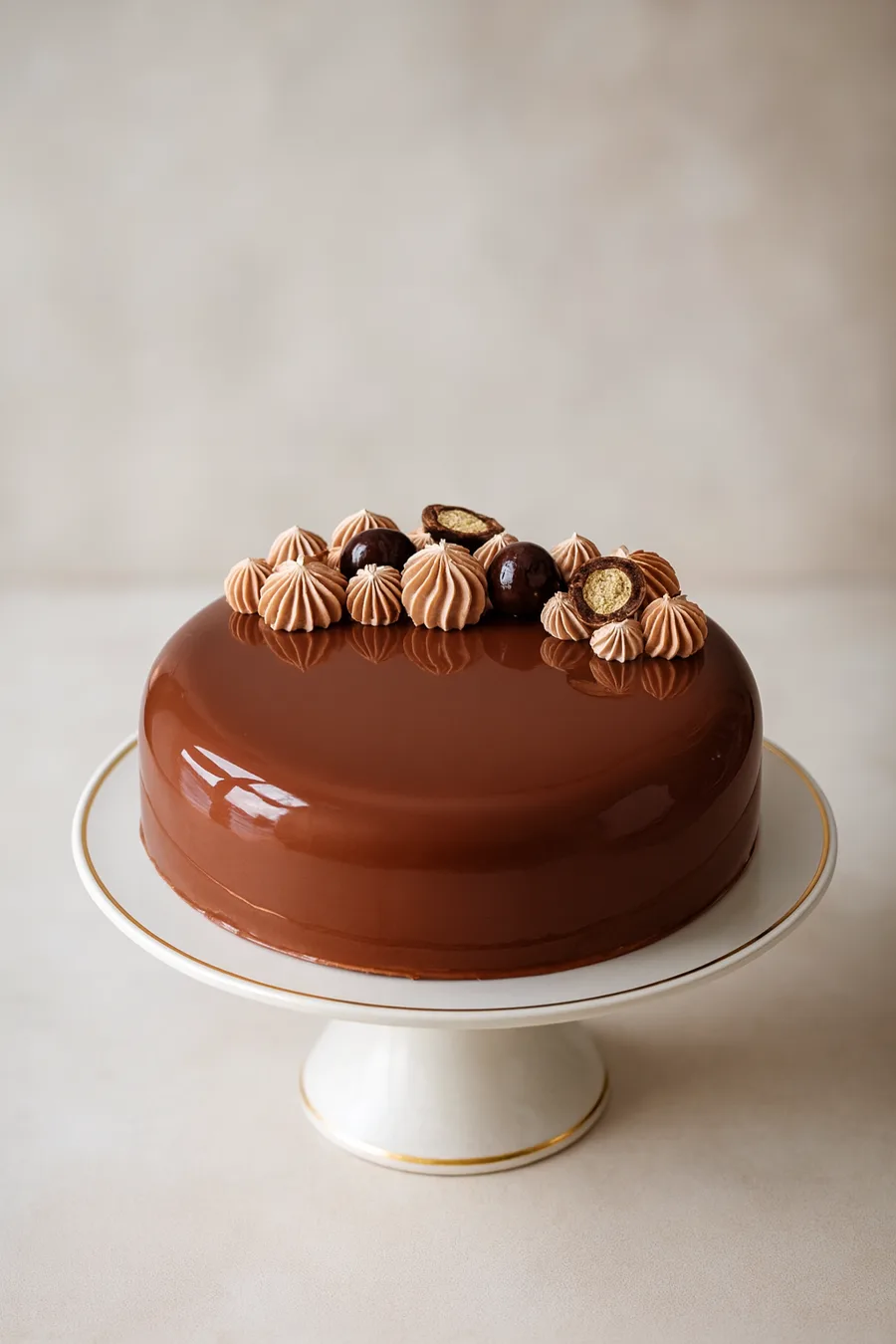
If you want to understand what the glossy coating is and how to cut through it neatly, our guide to mirror glaze cakes goes into the details. The short version: the glaze is a thin, sweet, glossy shell, and the cake underneath is soft, cool and light. It is a dessert that rewards a sharp knife and a cold plate.
Side by side: texture, richness, temperature and slicing
Here is how the two styles compare on the things that matter at the table.
| Baked cheesecake | Mousse cake | |
|---|---|---|
| Texture | Dense, creamy, velvety | Light, airy, melts quickly |
| Richness | High; a small slice satisfies | Moderate; feels lighter after a meal |
| How it is set | Baked in the oven, then chilled | Set cold; the filling is not baked |
| Best serving temperature | Cool, softened for about 30 minutes | Slightly chilled, close to fridge temperature |
| Slicing | Firm, clean slices with a warm knife | Neat slices while cold; softens fast |
| Typical finish | Fruit, cream, crumb sides | Mirror glaze, velour, gelée insert |
| Flavor profile | Tangy, less sweet | Sweeter on the glaze, delicate inside |
Both keep best refrigerated at 36 to 43 °F (2 to 6 °C) and are at their best within 48 hours. The difference is in the last half hour. We recommend taking a baked cheesecake out about 30 minutes before serving so the texture softens. A mousse or glaze cake tastes best slightly chilled, so give it less time on the counter, especially in a warm room.
One practical note on slicing. A cheesecake cuts best with a long knife dipped in hot water and wiped between cuts. A mousse cake cuts best straight from the fridge with a clean, dry, sharp knife, because a wet blade can streak the glaze. Neither is difficult, but the habits are opposite, and it helps to know which one you are holding.
Which one fits your occasion
The honest answer is that both are excellent. The better question is what the rest of your event looks like.
- Choose a baked cheesecake when the dessert is the main event, when the meal before it is light, or when you need clean, sturdy slices for a buffet line.
- Choose a mousse cake when dessert follows a big dinner, when you want something that looks modern and sculpted, or when a lighter finish suits the crowd.
- Choose a cheesecake for outdoor or garden parties in Collin County. It handles a few minutes in the open air with more grace than an airy mousse.
- Choose a mousse cake for an indoor, air-conditioned celebration where it can come out of the fridge and go straight to the table.
- For kids, the tang of cheesecake can divide opinion; a fruit mousse such as strawberry tends to be an easier crowd-pleaser.
Serving count also matters. Cheesecake slices are usually cut thinner because the cake is rich, so a cake that serves twelve can feel more generous than the number suggests. Mousse cakes are often cut into slightly larger slices. Our cake serving size guide has the numbers if you are planning for a specific headcount.
Allergens, sugar and special requests
The two styles have different ingredient profiles, and that can decide the choice for some guests. A baked cheesecake relies on eggs and dairy. A mousse cake relies heavily on dairy and usually contains a setting agent, and it may or may not contain eggs depending on the recipe.
Most of our cakes can be made nut-free and alcohol-free. The Pistachio & Raspberry Cake is built around nuts, so if a guest has a nut allergy we would steer you toward a fruit mousse instead. Our kitchen does handle gluten, dairy, eggs and nuts, so traces cannot be fully excluded, and we say that plainly rather than making a promise we cannot keep.
Reduced-sugar and vegetarian options are available on request, and we can provide a full ingredient list with every order. If you or a guest has a specific concern, tell us on the order form and we will confirm what is possible before you commit to a date.
Ordering, storing and serving
Every cake we make is baked to order, so the ordering process is the same for both styles. You send a request through the website form, we confirm availability by email or phone, and standard cakes need three to five days of lead time. If you are planning further out, or want a custom design, our article on how far in advance to order a cake explains the timeline in detail.
Transport deserves a word, because it differs slightly between the two. A cheesecake travels well as long as it stays flat and cool. A mousse cake is more sensitive to warmth and to tilting, since the layers are soft and the glaze can slide. In either case, keep the box flat on the car floor or in the trunk, run the air conditioning, and never put a cake on a seat. We cover this in full in our guide to storing and transporting a cake in the Texas heat.
If you would rather not drive it yourself, we offer chilled delivery within McKinney, and pickup at the bakery is always free. Either way, the cake goes into your refrigerator as soon as it arrives and comes out only when the table is ready.
Ready to order?
If you are still torn, think about the last course of your meal and the temperature of the room. A rich dinner and a cool room point to mousse. A lighter meal, a buffet, or a garden table point to cheesecake. Browse both styles in our catalog, or if you have an idea that is not on the shelf, send us a photo or a description and we will propose the design, flavors and price before you confirm.